The Bitcoin Century: CZ on Why Crypto’s Biggest Transformation Is Still Ahead

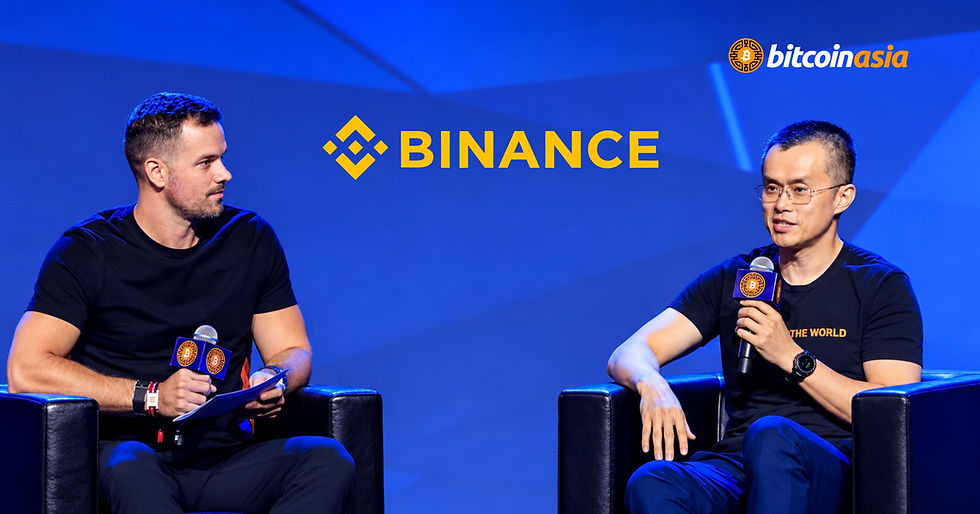
In this episode of When Shift Happens, I sit down with Changpeng Zhao (CZ), founder of Binance, live at Bitcoin Asia 2026 in Hong Kong to discuss what the next century could look like for Bitcoin and the broader cryptocurrency industry. From his prediction of a million-dollar Bitcoin to the growing interest of governments, the rise of tokenized assets, and the intersection of artificial intelligence and crypto, CZ shares why he believes we are entering one of the most exciting periods in the industry's history.
A Million-Dollar Bitcoin Is Only Part of the Story
When asked what would need to happen for the next 25 years to be remembered as the beginning of the Bitcoin century, CZ starts with an ambitious prediction: Bitcoin reaching $1 million. But he doesn't believe it will take 25 years. "I actually don't think we need 25 years. I think it's going to happen much quicker."
But price appreciation is only one part of his vision. For Bitcoin to reach its full potential, CZ believes it must become more useful in everyday financial life, from widespread payments to serving as a reserve asset for retirement and pension funds. He argues that people often overestimate how much can change in a year while underestimating what can happen over a decade. Looking at the rapid evolution of traditional finance's attitude toward Bitcoin, he sees the foundations of a much larger transformation already taking shape.
"We're actually at the best point in time compared to any time in history," he says.
Why Crypto's Future Depends on More Than Bitcoin
One of CZ's strongest arguments is that Bitcoin benefits when the broader cryptocurrency ecosystem succeeds. Consider tokenized stocks, which reduce some of the barriers faced by international investors. But the implications extend beyond the stock market. Someone who initially enters crypto to purchase tokenized shares may eventually discover Bitcoin, Ethereum, or other digital assets. The relationship works both ways, and greater participation in one part of crypto can introduce users to the rest of the ecosystem.
This also explains why CZ disagrees with the idea that Bitcoin should be the industry's only blockchain. "Bitcoin will be smaller if we didn't have other blockchains." While Bitcoin offers decentralization and an established position as a digital reserve asset, other blockchains provide environments for experimentation, new applications, and faster innovation. His broader message is that competition and diversity strengthen the industry, and crypto's growth does not have to be a zero-sum game.
Governments Face a Choice
CZ believes that the attitudes toward digital assets are evolving, with most governments increasingly recognizing crypto's importance. However, some countries introduce regulations to signal progress but establish such restrictive licensing requirements that meaningful industry development becomes nearly impossible. For instance, a government imposing excessively high transaction taxes may discourage activity so severely that it collects little revenue. A more balanced approach, he argues, could attract businesses, grow the industry, and ultimately generate greater economic benefits.
His advice to governments extends beyond regulation. He encourages them to establish cryptocurrency reserves, explore stablecoins denominated in their national currencies, and tokenize assets such as real estate, intellectual property, and natural resources. He highlights the UAE's regulatory progress, America's focus on stablecoins, and developments across Asia and Central Asia as examples of different approaches.
Why CZ Believes Bitcoin Will Overtake Gold
CZ is equally confident about Bitcoin's future as a national reserve asset. He acknowledges that governments have established systems for valuing, storing, and managing gold reserves, and that replacing or supplementing those systems with Bitcoin will take time. Still, he believes Bitcoin could overtake gold in importance sooner than many expect, potentially during an upcoming bull market.
When asked how countries should allocate cryptocurrency reserves, his answer is surprisingly diversified. Rather than recommending Bitcoin exclusively, CZ suggests selecting the five largest cryptocurrencies, excluding stablecoins, and allocating according to their relative market capitalizations. Under the approximate market composition he describes, Bitcoin would receive more than half of the allocation, with Ethereum and other leading assets making up the remainder. It is a market-driven approach that reflects his belief that different cryptocurrencies serve complementary purposes.
How AI Could Create Crypto's Next Major Opportunity
As AI agents become capable of researching products, negotiating prices, executing trades, and eventually making purchases independently, an important question emerges: What form of money will they use?
CZ believes cryptocurrencies are a natural fit, with stablecoins likely to be the starting point. Stablecoins offer relatively predictable values for transactions, while blockchain networks can support programmable transfers between automated systems. But he sees another possibility emerging from conversations with major AI companies.
"I've had discussions with multiple very large, top-tier AI companies about how to issue tokens." According to CZ, some AI companies are exploring tokens as a way to finance expensive computing infrastructure, provide access to data centers, or pay for subscription services. He also predicts that AI-powered trading may become widespread before AI-powered everyday payments. Trading requires rapid analysis of large amounts of information and immediate execution, areas where automated agents could offer advantages.
Eventually, he envisions a system where stablecoins facilitate commerce while Bitcoin continues to serve as a long-term savings asset.
Building the Future
Despite his confidence in Bitcoin's long-term prospects, CZ admits that predicting the next major crypto trend is difficult. He recalls that he could not have anticipated the ICO boom before it emerged in 2017, even though Binance would later launch through an ICO. The same unpredictability surrounded the rise of NFTs.
This unpredictability is part of what makes the industry exciting, and the next wave of innovation will come from entrepreneurs building products and solving problems that may not yet be obvious. And while no one can say exactly what the next decade will bring, CZ believes the opportunities ahead are greater than ever.
👉If you enjoyed reading the summary, head over to your favorite podcast platform to access the full convo or check out the video below.


Comments