Joseph Lubin on Why Decentralization May Be Humanity’s Last Line of Defense

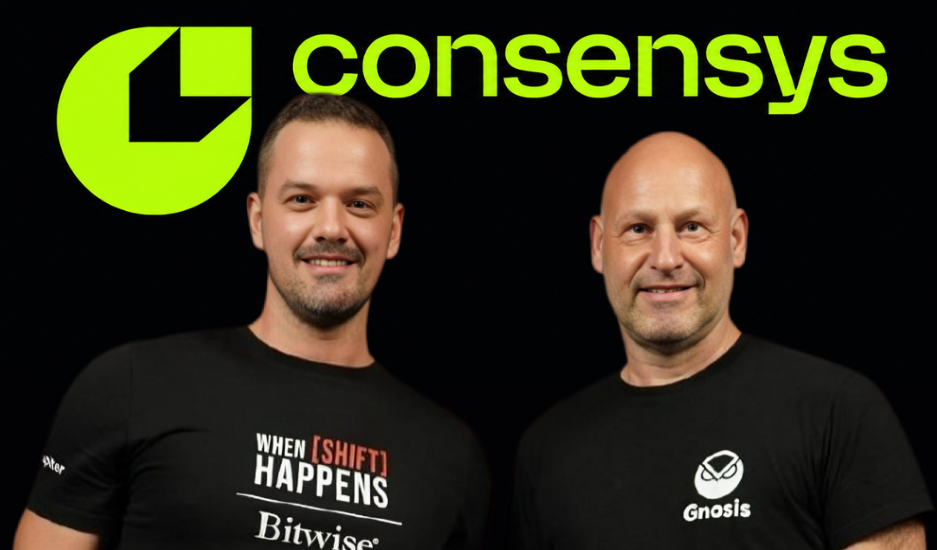
In this episode of When Shift Happens, I sit down with Joseph Lubin to discuss the future of decentralized systems, the growing danger of centralized AI, the collapse of trust in institutions, and why he believes blockchain technology represents a fundamental reorganization of society itself. Over the course of the conversation, Lubin reflects on his journey from software engineer and finance observer to Ethereum co-founder, explains how events like 9/11 reshaped his worldview, and lays out a vision where decentralized infrastructure becomes the foundation for finance, governance, identity, and eventually human-machine coordination itself.
From Financial Anxiety to Bitcoin
One of the most interesting parts of the conversation is how deeply Lubin’s entry into crypto was tied to disillusionment with the traditional financial system. Before Ethereum, before MetaMask, and before Web3 became a global movement, he was already studying debt cycles, monetary policy, and the structural incentives embedded within governments and financial institutions.
As he puts it, he began noticing that the global economy seemed trapped in a feedback loop of debt accumulation, lobbying, and monetary expansion. He points to the abandonment of the gold standard, growing government deficits, and the inability of political systems to stop themselves from continuously expanding debt obligations. Referencing Ray Dalio’s work on long-term debt cycles, Lubin explains that by the late 2000s, he had become increasingly pessimistic about where the world was heading.
Then he read the Bitcoin white paper.
“When I read Satoshi’s white paper,” he says, “I was like, hey, this decentralized trust thing can fix everything.”
That line captures the emotional core of Lubin’s story. Bitcoin was not merely an investment opportunity or a technological curiosity to him. It represented a completely new trust architecture. For someone who had become deeply skeptical of centralized systems, Bitcoin offered the possibility of rebuilding society’s financial foundations from the ground up. What changed his life was not just digital money itself, but the idea of decentralized trust.
Why Ethereum Felt Bigger Than Bitcoin
Lubin explains that while Bitcoin introduced the idea of decentralized trust, Ethereum expanded its potential dramatically. The key breakthrough, in his view, was that Ethereum transformed blockchain technology from a narrow monetary system into a general-purpose platform that developers could build almost anything on.
Rather than forcing developers to build complex applications on top of Bitcoin’s relatively limited scripting system, Ethereum gave developers access to a programmable, computationally complete virtual machine. That shift unlocked entirely new possibilities: decentralized finance, prediction markets, tokenized assets, DAOs, and broader Web3 applications.
Lubin’s framing of Ethereum is particularly notable because it avoids the usual “world computer” cliché often associated with the project. Instead, he argues that Ethereum is evolving through layers. First came decentralized trust. Then decentralized finance. Eventually, he believes, decentralized social infrastructure and broader decentralized coordination systems will emerge on top of those foundations.
In many ways, Lubin views Ethereum less as a product and more as civilization-scale infrastructure.
Decentralization as an Organizing Principle
The philosophical center of the conversation revolves around decentralization itself. Lubin repeatedly returns to the idea that decentralization is not simply a technical design choice, but an organizing principle for human society. He argues that top-down systems are efficient for building large civilizations, but often become brittle, stagnant, and vulnerable to power consolidation over time. Hierarchies, he says, naturally incentivize information hoarding, political maneuvering, and selfish behavior.
Decentralized systems attempt to solve this by introducing more horizontal participation into how decisions are made and how value is distributed. “What decentralized protocols do,” Lubin explains, “is enable large groups of people or intelligences to make decisions in virtually real time.”
This becomes especially important in the age of AI.
Throughout the episode, Lubin warns that society is approaching a fork in the road. On one side lies a future dominated by centralized AI systems controlled by governments or large technology corporations. On the other hand lies a decentralized architecture where machine intelligence is distributed more openly, and individuals retain agency over their digital and financial lives. “If we don’t figure out that architecture,” he warns, “we’ll probably see governments or big technology organizations having access to too much machine intelligence power and being able to control humans and all the systems of the world.”
MetaMask and the Rise of Self-Sovereign Finance
The most practical section of the conversation focuses on Consensys and MetaMask.
Lubin explains that MetaMask originally began as a simple interface that hid the complexity of blockchain cryptography from users. Instead of manually interacting with complicated signing systems, users could simply specify what they wanted to do. Over time, it evolved into something much larger.
Lubin now describes it as an emerging “fully featured financial platform that you own.” Traditional banks hold custody over users’ assets, control access to accounts, and monetize deposits internally. MetaMask, by contrast, aims to place financial control directly into the hands of users while connecting them to decentralized financial systems.
Lubin believes stablecoins, tokenized assets, and DeFi products are gradually becoming usable not just for crypto-native individuals, but for corporations and eventually mainstream users. Once regulatory clarity improves, particularly in the United States, he expects adoption to accelerate significantly.
“There’s going to be,” he says, “probably a stampede.”
The Burden of Self-Sovereignty
One of the more nuanced moments comes when the conversation turns toward self-custody and individual responsibility. Lubin openly acknowledges that self-sovereignty creates complexity. Most people, he argues, are not financially literate enough to safely manage full control over their assets today. At the same time, he believes relying entirely on centralized institutions may ultimately be even more dangerous.
His proposed solution is fascinating: AI-assisted self-custody. Rather than expecting users to manually manage wallets, protocols, and DeFi positions, Lubin imagines intelligent agents acting as “digital twins” that understand users’ goals and execute financial decisions on their behalf. In this vision, AI does not replace human agency but enhances it.
That distinction sits at the heart of the episode. Lubin is not anti-technology. In fact, he is extraordinarily optimistic about AI. What he fears is concentrated control over AI systems without decentralized counterbalances. For him, blockchain is ultimately about preserving agency in an increasingly automated world.
And that may be the deepest lesson from the conversation: the real battle in crypto was never only about money. It was always about who gets to control the systems humanity increasingly depends on.
👉If you enjoyed reading the summary, head over to When Shift Happens on YouTube or your favorite podcast platform to access the full convo.


Comments