Armani Ferrante on Building Through Collapse, Market Structure, and Crypto’s Real Inflection Point

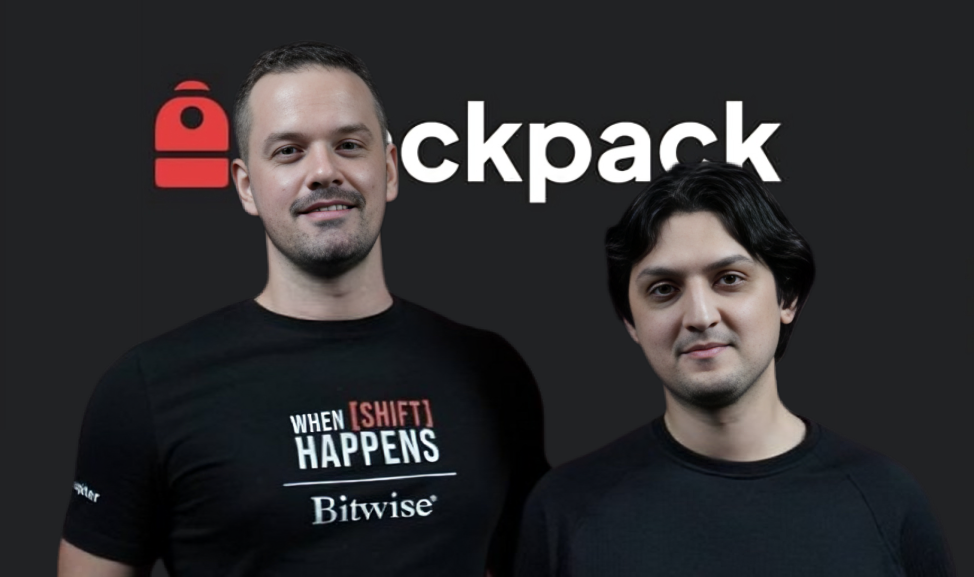
In this episode of When Shift Happens, I sit down with Armani Ferrante to discuss what it really means to build in crypto when everything falls apart. From losing nearly his company’s entire balance sheet in the collapse of FTX, to rebuilding Backpack into a regulated global exchange, Armani explores identity under pressure, the philosophical foundations of crypto, and the structural shift happening as blockchain technology begins to merge with traditional finance.
The Question That Defines You
When FTX collapsed, Backpack effectively died overnight. Armani describes it plainly: “We had $14.5 million on FTX… about 90% of our balance sheet. The company was basically dead.” But what followed wasn’t a strategy discussion. It wasn’t about capital, or pivots, or damage control. It was a question: “What type of person are you?”
In Armani’s view, decisions under pressure are identity-driven. Whether you’re running a startup or a gas station, the response to adversity is the same. You either give up or you don’t. He made that decision mid-flight, before even landing: “I want to choose to be the person that doesn’t give up… and if that’s who you are, then you just figure out how to survive.”
Crypto, Surveillance, and the Panopticon
Before getting into markets or products, Armani talks about crypto’s link to philosophy. Referencing Michel Foucault and the idea of the panopticon, he frames modern systems as inherently asymmetric. You are visible, but you cannot see who is watching you. That dynamic enforces self-regulation. Blockchains, ironically, risk recreating this structure.“Without privacy, it is directionally very close to a panopticon.”
This is one of the more under-discussed contradictions in crypto. While it is often framed as a tool for freedom, most public blockchains are fully transparent. Every transaction is traceable. In many cases, it is easier to track financial activity on-chain than with cash. That tension between transparency and freedom is still unresolved. And it explains why privacy-preserving technologies continue to emerge alongside public ledgers.
Building Without a Master Plan
Armani’s path into crypto wasn’t strategic. Instead, he was driven by curiosity. After reading the Ethereum whitepaper, he left a stable engineering role with no plan other than to contribute to the space. That led him to Alameda Research, where he worked on early systems before leaving, only to return later and help build foundational infrastructure on Solana.
What stands out is how early Solana was: “It was basically just a blank canvas… a high throughput system with no applications.” He built core primitives—wallets, developer frameworks, multisigs—not because there was a clear business opportunity, but because the problems were there to be solved. Backpack itself emerged in the same way. Not from a grand vision, but from iteration: “We’re just iteratively solving problems… let’s hire more engineers and solve more.”
The FTX Collapse and the Illusion of Reality
If the collapse of FTX tested identity, it also revealed something else: how fragile “truth” is in markets. Armani describes watching narratives form in real time, many of which were wrong. “There was a very clear disconnect between perceived reality and actual reality.”
Solana, for example, was widely labelled an “FTX chain,” despite having no structural dependence on FTX itself. The price collapsed, funding dried up, and meaningful projects were dismissed even though nothing fundamental had changed. This is one of the more important insights from the episode: markets don’t just misprice assets, they misinterpret reality. And once a narrative takes hold, it becomes self-reinforcing. For builders inside the system, this creates a strange duality. You see both the ground truth and the distortion at the same time.
Solana, Anti-Fragility, and the Power of Persistence
Armani draws a clear distinction between Solana and the broader crypto industry.
While the industry spins around narratives and market cycles, Solana has continued to grow its core capabilities. Transaction throughput, developer activity, and ecosystem depth have all increased. More importantly, it has survived repeated “death moments.” “It’s an anti-fragile system… the more chaos it goes through, the stronger it becomes.”
But beyond the engineering and infrastructure is the deep belief and genuine sense of community on Solana. The Mad Lads NFT launch in 2023 was one of those moments that highlighted the culture and proved that the community was still alive, still building, still engaged.
Crypto as Financial Infrastructure
Armani strips crypto down to something unglamorous: “Crypto is fundamentally database technology.” A shared, trustless system where ownership and state are collectively agreed upon. The most successful application of this so far? Finance.
While crypto-native users feel bearish, traditional finance is increasingly bullish. The reason is simple: blockchains can fix the plumbing. He gives a striking example with Dole Foods, where more shareholders claimed ownership than shares actually existed. Not because of fraud, but because of the layered, inefficient systems behind modern markets.
Blockchains collapse that complexity into a single state: No settlement delays. No intermediary layers. No ambiguity around ownership. This is why institutions are paying attention. Not for decentralisation ideology, but for efficiency and risk reduction.
The Real Opportunity: Unified Markets
Backpack sits directly at this intersection. The idea of a unified margin account, where you can borrow against assets, move capital instantly, and trade across asset classes, is not new. But access to it has historically been limited to high-net-worth individuals.
Crypto changes that.
It enables real-time settlement, global access to capital markets, collateral that can move freely across systems, and more importantly, it enables convergence. “The big change… is applying these systems not just to crypto, but to every piece of tokenized value.” Stocks, bonds, real estate, etc., so that everything becomes part of the same financial layer. That is the real story Armani is pointing to. Not crypto as an asset class, but crypto as infrastructure.
Identity Before Everything Else
There are a lot of ideas in this conversation, but the thread that ties everything together is much simpler: identity.
In an industry obsessed with timing, narratives, and outcomes, this is a reminder that the most important variable is still internal. Because in the end, markets recover, systems evolve, narratives change. But the question remains the same: What type of person are you?
👉If you enjoyed reading the summary, head over to When Shift Happens on YouTube or your favorite podcast platform to access the full convo.


Comments